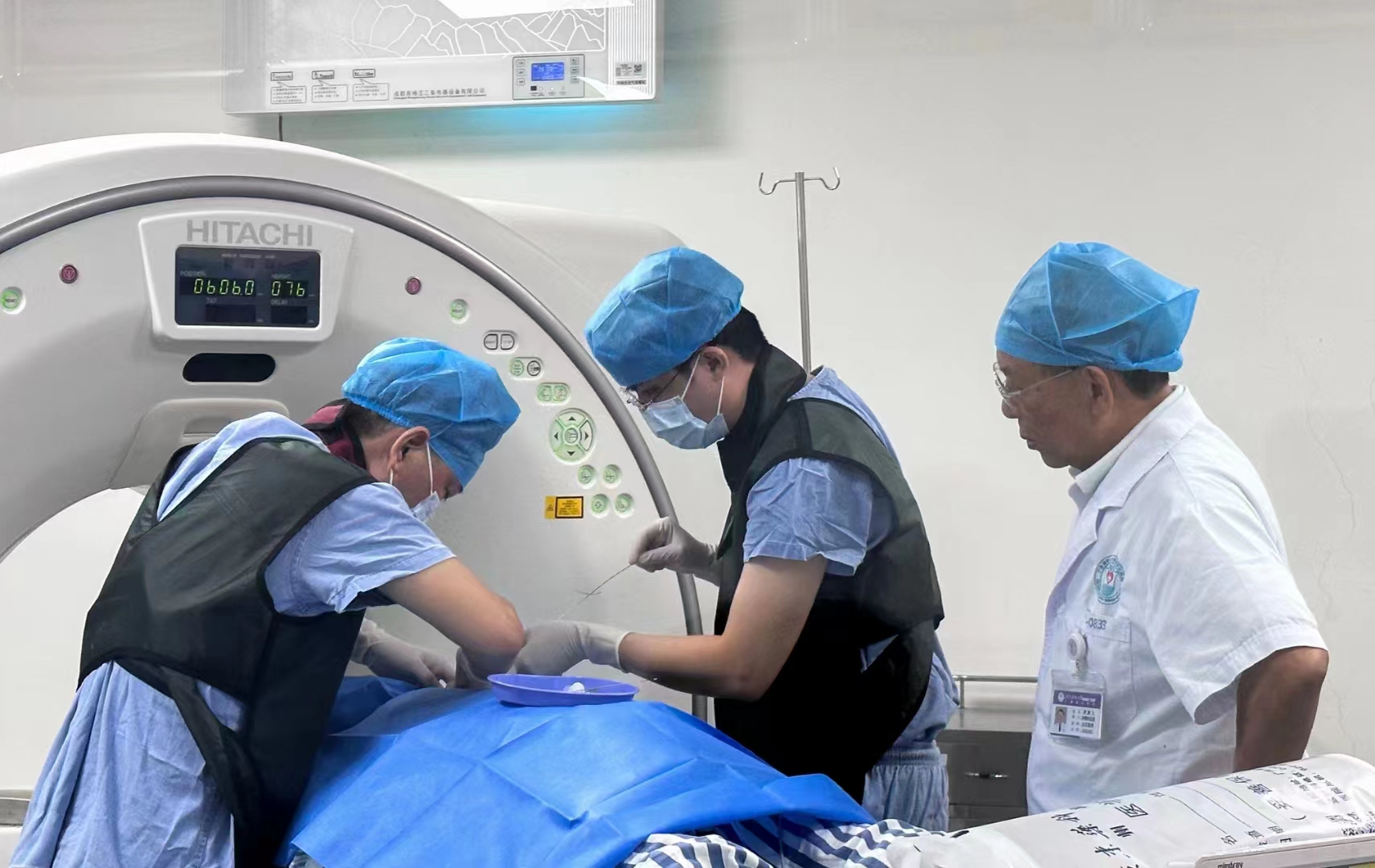
For cancer patients, "ascites" is a common and challenging clinical complication. Various malignant tumors, including peritoneal cancer, lung cancer, ovarian cancer, and liver cancer, can develop cancerous ascites as the disease progresses. This accumulation of fluid in the abdominal cavity, caused by tumor invasion, not only leads to severe abdominal distension and limited mobility but can also severely impact respiratory and digestive functions in serious cases. So, how should cancerous ascites be managed scientifically?
Ms. Chen, a 48-year-old resident of Xuzhou, Jiangsu Province, was diagnosed with ovarian cancer four years ago and underwent surgical resection, followed by consistent post-operative follow-up. She regularly followed updates on cancer diagnosis and treatment online and was already familiar with the Luo Pengfei · Wang Jian Minimally Invasive Interventional Oncology Research Team at the Fifth Oncology Department of Guangdong Pharmaceutical University Guangzhou Fosun Chancheng Hospital (Xinshi Hospital).
In February 2026, Ms. Chen's condition suddenly deteriorated. The tumor recurred, accompanied by a significant accumulation of fluid in the abdominal and pelvic cavities. Her abdomen became severely distended, causing not only unbearable bloating and inability to eat but also difficulty breathing and an inability to lie flat, leading to a sharp decline in her quality of life. After receiving symptomatic treatment at a local hospital where the ascites kept recurring and proved difficult to control, Ms. Chen and her family traveled specifically from Xuzhou to Guangzhou in early March 2026, seeking out the Luo Pengfei · Wang Jian team based on their reputation.
Upon Ms. Chen's admission, the Luo Pengfei · Wang Jian interventional team promptly completed relevant examinations. After comprehensively evaluating the progression of her disease, her physical tolerance, and the cause of the ascites, they developed a personalized minimally invasive interventional plan that addressed both internal and external factors. The strategy involved a dual-pronged approach—controlling the tumor and draining the fluid—to fundamentally resolve the ascites issue.
Step One: External to Internal, Drainage Decompression + Drug Infusion
First, percutaneous catheter drainage was performed to precisely drain the large volume of fluid in the abdominal cavity, quickly relieving acute symptoms like bloating and difficulty breathing, thereby reducing the physical burden on the patient. Simultaneously, targeted drugs were infused through the catheter into the abdominal cavity to inhibit the re-accumulation of ascites and improve the intra-abdominal environment.
Step Two: Internal to External, Embolizing Blood Supply + Inactivating the Tumor
This is the core part of the treatment and the key to conquering refractory ascites—identifying the tumor's micro-feeding blood vessels and curbing ascites production at its root. Using interventional catheter techniques, the team first performed bilateral internal iliac artery angiography, which clearly revealed increased and disordered branching of pelvic tumor vessels and significant tumor staining. After precisely locating the feeding vessels, they meticulously inserted a microcatheter into the tumor's branched vessels, infused high-concentration, low-dose chemotherapy and targeted immunotherapy drugs locally, and then completely embolized the vessels. This cut off the tumor's nutritional supply, achieving tumor inactivation and preventing ascites recurrence.
Post-procedure angiography confirmed the complete occlusion of the tumor-feeding arteries and the disappearance of tumor staining, indicating a successful procedure. This comprehensive approach, combining external and internal strategies to treat both symptoms and root causes, not only provided rapid relief from acute symptoms but also controlled the tumor at its source, fully demonstrating the unique advantages of comprehensive minimally invasive therapy for refractory ascites.
After two weeks of standardized treatment, Ms. Chen's symptoms of abdominal distension and difficulty breathing completely disappeared. A follow-up examination showed her waist circumference had returned to normal, the fluid in the abdominal and pelvic cavities had largely subsided, and her condition was effectively under control. Once tormented by ascites, she could finally eat normally and rest comfortably, expressing high praise for the treatment's effectiveness. This successful case also provided valuable clinical experience for managing refractory ascites in cancer patients.
Warm Reminder
During their recovery period, cancer patients must strictly adhere to medical advice, undergo regular follow-ups, and be vigilant for signs of complications such as ascites. Given the challenging and debilitating nature of cancer, patients are prone to anxiety, fear, negativity, and other emotional distress. The companionship, care, and psychological support from family members represent a healing power that no medication can replace, helping patients better confront the disease.