Uncle Zhang, a 62-year-old resident of Ganzhou City, Jiangxi Province, was diagnosed with a brain glioma at the end of last year. In January of this year, he underwent two surgeries at a local hospital, which temporarily alleviated his condition. However, not long after, his symptoms recurred, plunging his family into deep anxiety.
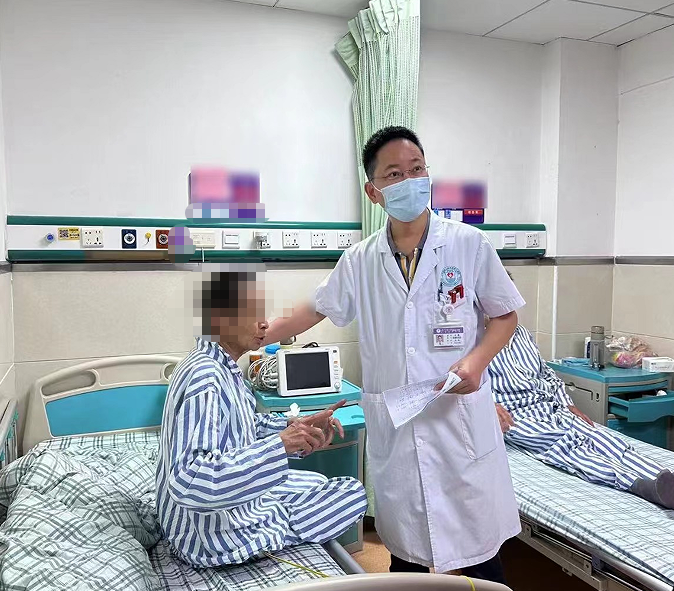
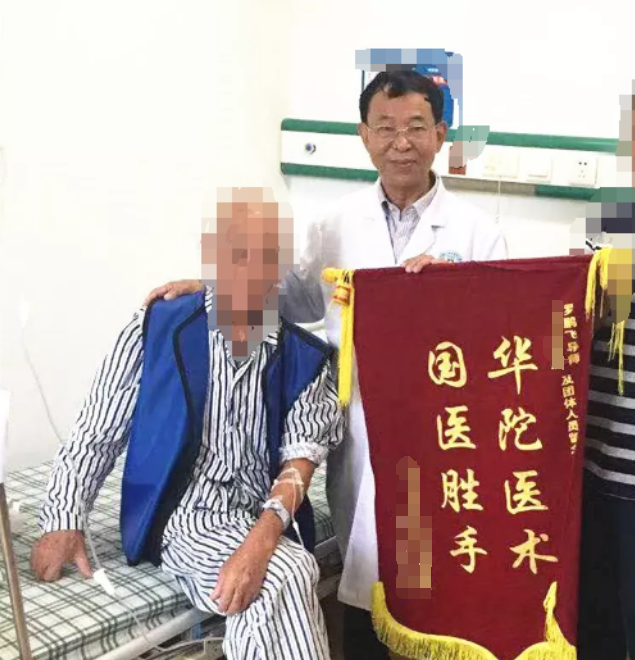
In early March, Uncle Zhang began experiencing repeated numbness and mobility difficulties in his right limbs. A follow-up examination revealed a recurrence of the intracranial tumor. The trauma from multiple surgeries and the dilemma of treating a recurrence made Uncle Zhang and his family especially cautious about subsequent treatment options. Recommended by a fellow patient, Uncle Zhang learned about the "Luo Pengfei Programmatic Procedure for Inactivating Tumor Biological Activity" and the expertise of the Luo Pengfei · Wang Jian Interventional Research Team at the Fifth Oncology Department of Guangdong Pharmaceutical University Guangzhou Fosun Chancheng Hospital (Xinshi Hospital) in managing complex recurrent tumors. He subsequently traveled specifically from Jiangxi to Guangzhou for medical care.
Upon consultation, Professor Luo Pengfei and Professor Wang Jian's team thoroughly evaluated Uncle Zhang's condition, physical tolerance, and treatment history. Considering the characteristics of post-operative glioma recurrence, they recommended a minimally invasive approach using radioactive iodine-125 seed implantation (internal radiotherapy). This technique could precisely target the lesion while minimizing damage to healthy brain tissue.
On March 12, guided by high-definition CT in real-time, Professors Luo Pengfei and Wang Jian jointly performed the iodine-125 seed implantation for the recurrent intracranial glioma. The entire procedure was executed with meticulous precision, with continuous intraoperative monitoring to ensure no seeds were misplaced. Ultimately, 30 seeds were uniformly implanted and neatly arranged within the tumor, achieving comprehensive coverage of the lesion and continuously suppressing and inactivating the tumor tissue from within.
After the procedure, Uncle Zhang experienced no significant discomfort and recovered steadily. He was successfully discharged on March 16. By the time of discharge, the numbness in his right limbs had significantly improved, his condition was effectively controlled, achieving what is clinically considered a "reversal" of the disease progression.
Seed implantation, formally known as "radioactive seed implantation brachytherapy," is a form of minimally invasive internal radiotherapy. Its core principle involves precisely implanting miniature radioactive sources directly into the tumor, which continuously emit radiation to destroy tumor cells. In the field, iodine-125 seeds are often compared to "miniature little suns." The radiation intensity is higher near the seed, but the effective radiation range is controllable, maximizing the reduction of damage to surrounding normal tissues.
This technique is particularly suitable for patients with residual tumors after surgery, recurrent cancer foci, or those who cannot tolerate repeat surgeries or conventional radiotherapy and chemotherapy. Professor Wang Jian explained that radioactive seed implantation is already a standard treatment for specific tumors in some countries overseas, and its clinical application and therapeutic principles in China are gradually gaining industry recognition and patient acclaim.
It is important to note that intracranial tumor seed implantation has long been considered a highly challenging area of interventional diagnosis and treatment. The brain is densely packed with nerves and functional areas, demanding extreme precision in operation. Currently, there are not many hospitals in China capable of proficiently performing this delicate internal radiotherapy for intracranial tumors, and Guangzhou Xinshi Hospital is one of them.
Compared to traditional craniotomy, using seed implantation for patients with recurrent gliomas offers advantages such as being minimally invasive, virtually painless, requiring shorter treatment duration, having fewer complications, and enabling faster recovery. It is a more favorable option for elderly patients and those with postoperative recurrence, providing a new treatment alternative for such complex cases.