Numbness in the face, bloodshot left eye, decreased hearing, and occasional dizziness... Ultimately, 60-year-old Axiu (pseudonym) was diagnosed with a meningioma requiring surgery. But which surgical approach to choose—the popular Gamma Knife treatment or interventional superselective therapy? Axiu was torn. Eventually, she sought out the Luo Pengfei · Wang Jian Interventional Oncology Research Team at the Fifth Oncology Department of Guangdong Pharmaceutical University Guangzhou Fosun Chancheng Hospital (Xinshi Hospital). After undergoing a multidisciplinary team (MDT) consultation, she opted for interventional surgery, which proved highly successful. Experts note that both surgical methods have distinct characteristics, and the choice ultimately depends on the patient's specific condition.
Intracranial Tumor Worsens After 12 Years
Now 60 years old, Axiu was diagnosed 12 years ago with a "space-occupying lesion in the left cavernous sinus (benign)."
In the past two months, she experienced worsening numbness on the left side of her face, bloodshot left eye, decreased hearing in her left ear, and occasional dizziness. Axiu shared that she had undergone Gamma Knife radiotherapy three times since her diagnosis. Recently, her facial numbness had become significantly more pronounced, and she frequently felt dizzy. She had sought a follow-up consultation at an out-of-town hospital, but the hospital refused to perform Gamma Knife treatment again, citing excessively high risks and suboptimal expected outcomes. Consequently, she traveled from out of town to Guangzhou on February 19th, seeking medical help. After visiting several hospitals without finding a treatment plan she felt confident about, feeling lost and helpless, she learned through a friend about the Fifth Oncology Department at Guangdong Pharmaceutical University Guangzhou Fosun Chancheng Hospital (Xinshi Hospital). Holding onto her last hope, she sought treatment from the Luo Pengfei · Wang Jian Interventional Oncology Research Team based on their reputation.
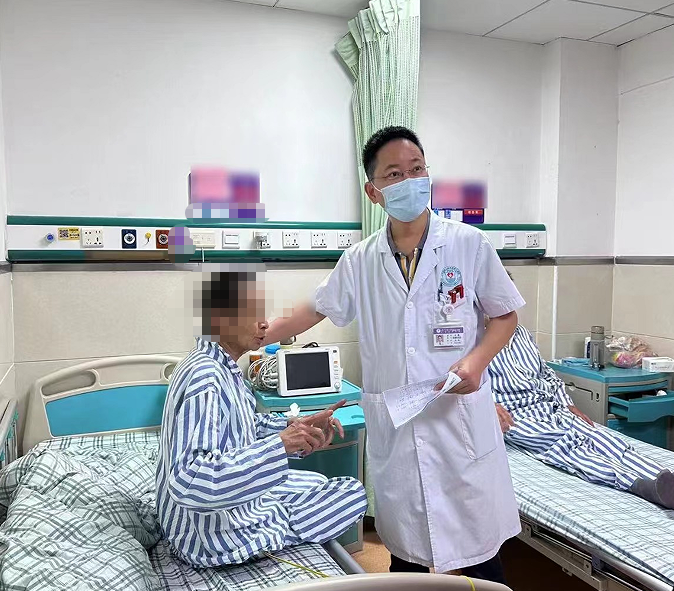
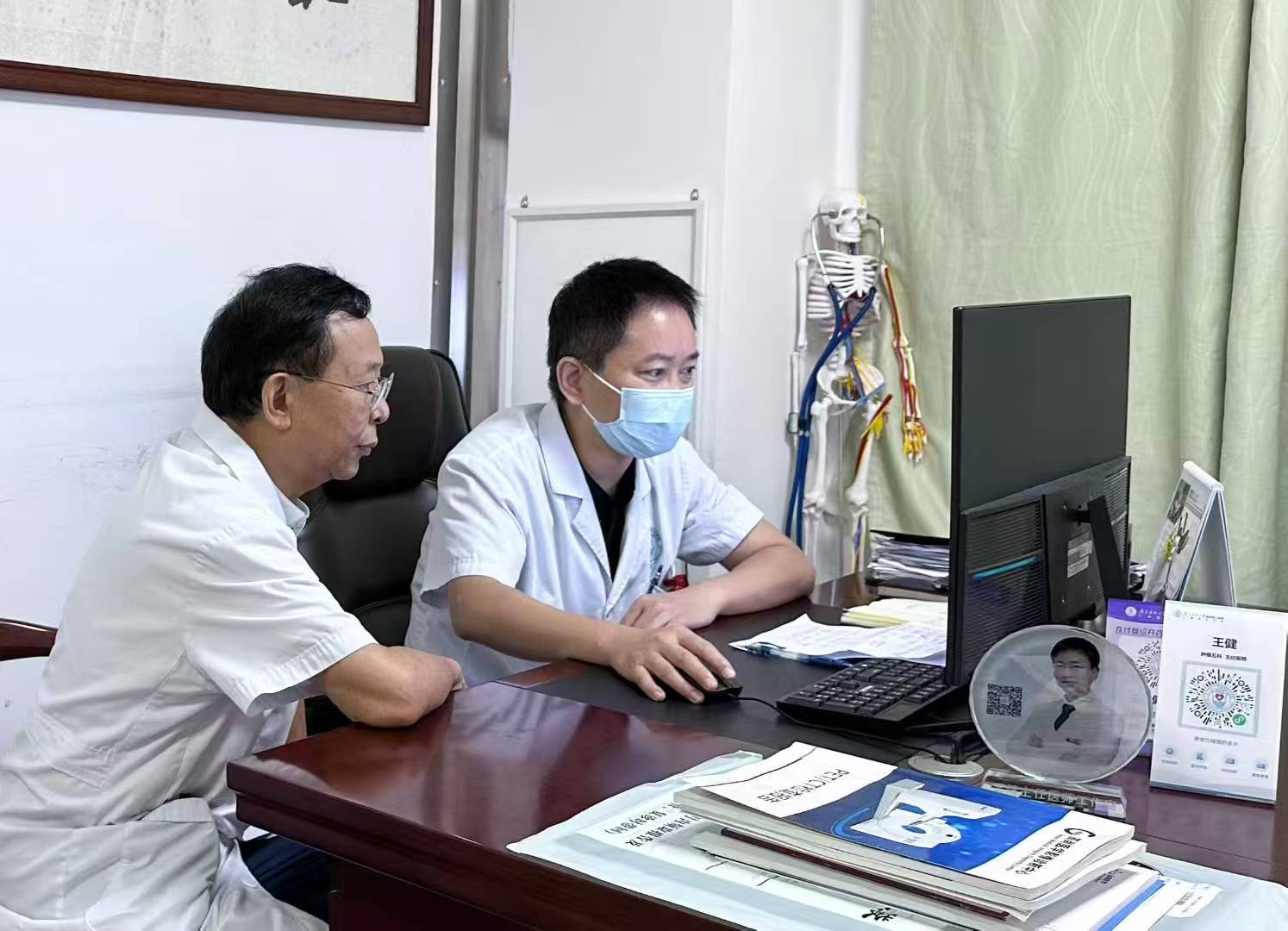
Professor Wang Jian, a member of the Liver Cancer Professional Committee of the Guangdong Anti-Cancer Association and Chief Physician in the Fifth Oncology Department at Guangdong Pharmaceutical University Guangzhou Fosun Chancheng Hospital (Xinshi Hospital), promptly consulted with Professor Luo Pengfei upon receiving Axiu. Their consultation opinion was quickly established: the patient has a space-occupying lesion on the left parasellar region, primarily located at the middle cranial fossa base, adjacent to the sphenoid sinus and cavernous sinus. The tumor compresses adjacent cranial nerves, causing corresponding symptoms, and is highly likely a meningioma. They recommended left common carotid artery and left external carotid artery angiography. If the tumor's blood supply mainly originates from the external carotid artery, embolization using coarse gelatin sponge and/or microcoils could be performed. If the blood supply primarily comes from the internal carotid artery system, embolization is not feasible, and radiotherapy would be recommended for the patient.
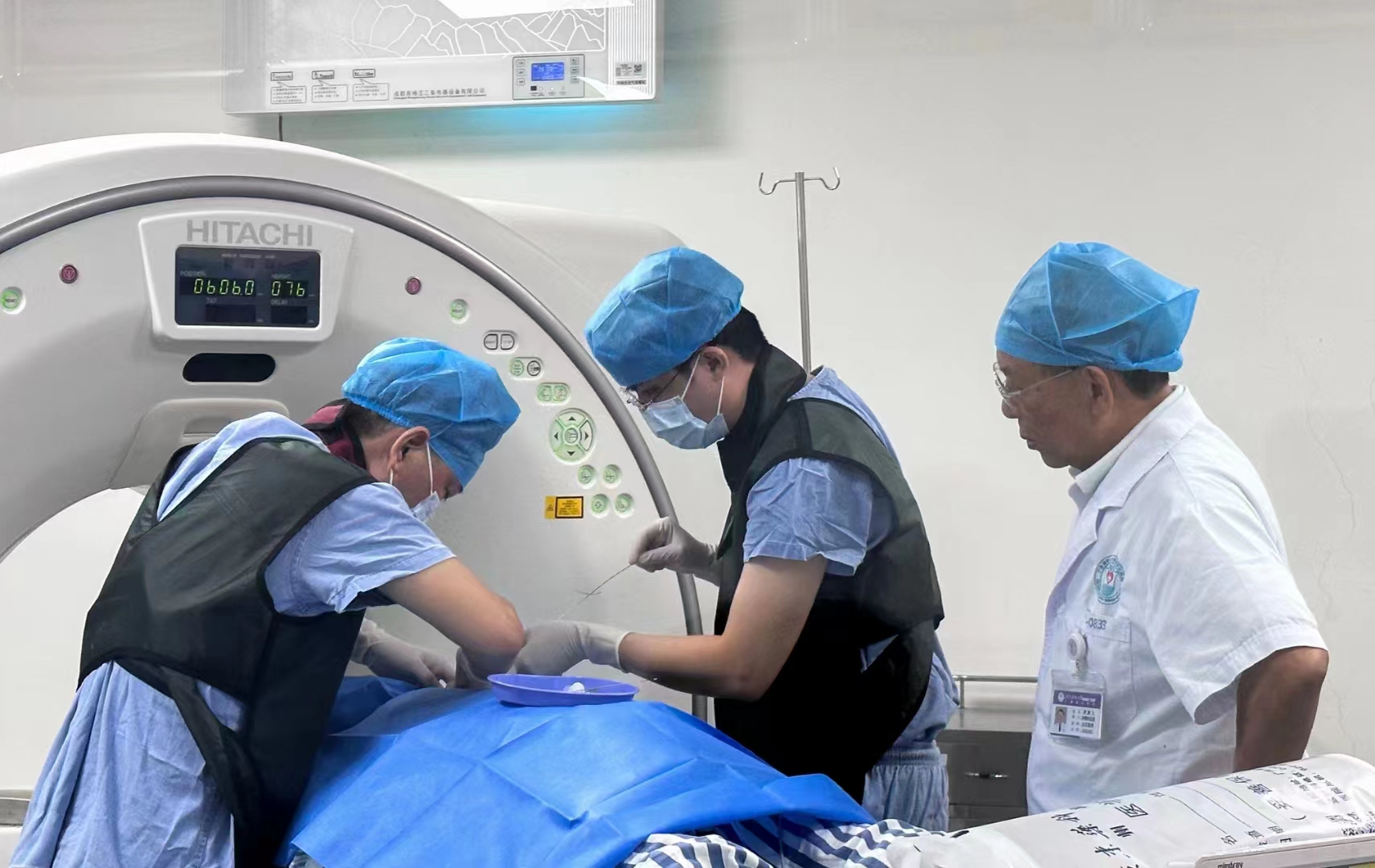
On the third day after admission, Professor Wang Jian performed the interventional procedure on Axiu. Intraoperative angiography revealed that the left ascending pharyngeal artery was the main feeding vessel for the tumor. This vessel was subsequently thoroughly embolized using gelatin sponge particles. Post-embolization angiography showed occlusion of the tumor-feeding artery and disappearance of tumor staining. The surgery was highly successful, and the patient experienced no significant discomfort.
Meningioma Has a Long Course, Surgical Approach Selection Requires Caution
Professor Wang Jian explained that meningiomas originate from the meninges and their interstitial derivatives, accounting for 19.2% of intracranial tumors, ranking second in incidence. The female-to-male ratio is 2:1, with the peak incidence age around 45, and it is rare in children. The development of meningiomas may be related to certain changes in the internal environment and genetic mutations, rather than a single factor. Contributing factors may include head trauma, radiation exposure, viral infections, and conditions like bilateral acoustic neuromas. It is generally believed that the division rate of arachnoid cells is very slow; the aforementioned factors may accelerate this division rate, potentially representing an early critical stage leading to cellular degeneration.
Meningiomas are benign tumors with slow growth and a long course. As they expand, patients often present with headaches and epilepsy as initial symptoms. Depending on the tumor's location, patients may also experience visual, visual field, olfactory, or auditory impairments, as well as limb movement disorders. In elderly patients, epileptic seizures are particularly common as the first presenting symptom.
Professor Wang Jian noted that as the tumor grows and causes compressive symptoms, the traditional treatment is surgical resection. However, due to tumor location, approximately 17% to 50% of meningiomas cannot be completely resected and require adjunctive radiotherapy, such as Gamma Knife, though recurrence remains a concern. Interventional superselective therapy, by blocking the tumor's blood supply, curbs tumor growth at its source, achieving a similar effect to internal resection. It is characterized by minimal trauma, no adverse reactions, and the potential for repeat procedures.
Professor Wang Jian cautioned that interventional surgery is technically challenging, requiring meticulous superselective techniques. Patients must seek treatment at qualified, accredited hospitals.