The daughter of the hospitalized elderly woman, Mrs. Wang, said with a choked voice that her mother was a senior engineer who officially retired at the age of 60. In her youth, she had participated in the construction of the Hankou Bridge and Tianhe Airport in Hubei, dedicating most of her life to the country's infrastructure development. She should have been enjoying her retirement, but unfortunately, she was diagnosed with liver cancer in March 2023 and thus embarked on a long journey of fighting the disease.
Over the past three years, Mrs. Wang had received active treatment at four different hospitals. Most of the tumor's activity was effectively suppressed, and her condition once stabilized. However, the disease did not stop there. In January of this year, her condition suddenly worsened. She developed jaundice in her skin and sclera. An abdominal CT scan revealed bile duct stricture, confirmed to be caused by tumor compression. The medical team subsequently placed PTCD (percutaneous transhepatic cholangial drainage) tubes in her left and right bile ducts to temporarily relieve the jaundice symptoms.
To make matters worse, in February, the PTCD drainage tube in Mrs. Wang's left bile duct accidentally fell out. This was followed by malignant ascites, causing severe abdominal distension that made eating and resting impossible, turning even basic activities into a struggle. Her family took her to several major hospitals in Guangzhou, but due to the complexity of her condition and the dangerous location of the lesion, they were told that no effective treatment was currently available.
Imaging results showed that Mrs. Wang's tumor was located precisely at the junction of the left bile duct, right bile duct, and common bile duct—a critical "traffic hub" of the biliary tract. This area is densely packed with blood vessels and bile ducts, leaving minimal operating space. Any slight error could damage surrounding vital tissues, making the treatment extremely difficult, which deterred many hospitals.
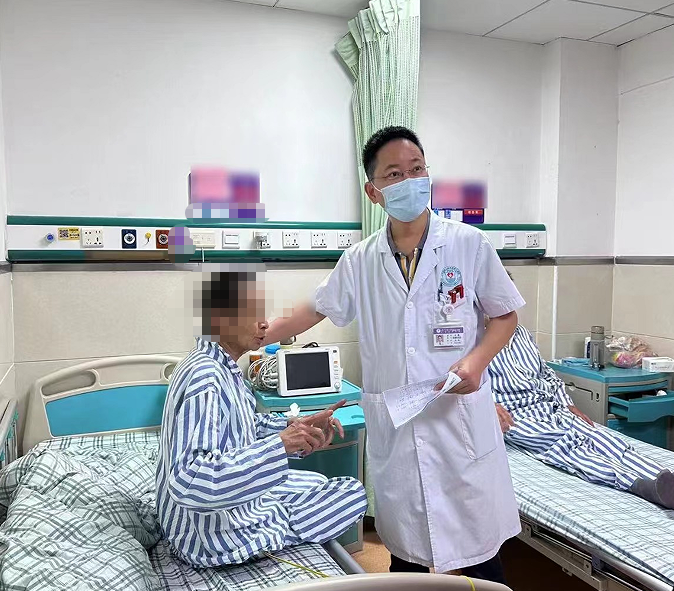
Her devoted daughter refused to give up. After extensive inquiries and recommendations from fellow patients, she finally found Professor Luo Pengfei, a renowned expert in interventional medicine in China. On the day of her hospitalization, Mrs. Wang, tormented by her illness, held Professor Luo's hand and tearfully described her suffering. Her eyes were filled with despair, and she even confessed that she felt "living was worse than dying."
Professor Luo Pengfei, who had battled cancer alongside patients for forty years and treated over 20,000 liver cancer patients, deeply understood her anxiety, pessimism, and despair at that moment. He gently reassured her, "The suffering caused by this disease is already enough. We shouldn't torment ourselves mentally as well. If you give up to despair, how heartbroken would your children be? Let's admit you to the hospital and work together!"
These warm yet firm words were like a beam of light in the midst of deep darkness, instantly igniting Mrs. Wang's will to live. With tears in her eyes, she nodded, determined to fully cooperate with the treatment. "I've never met such a down-to-earth and caring professor. Coming here has lifted my spirits. I feel a doctor-patient connection with Professor Luo," Mrs. Wang couldn't help but share with her daughter.
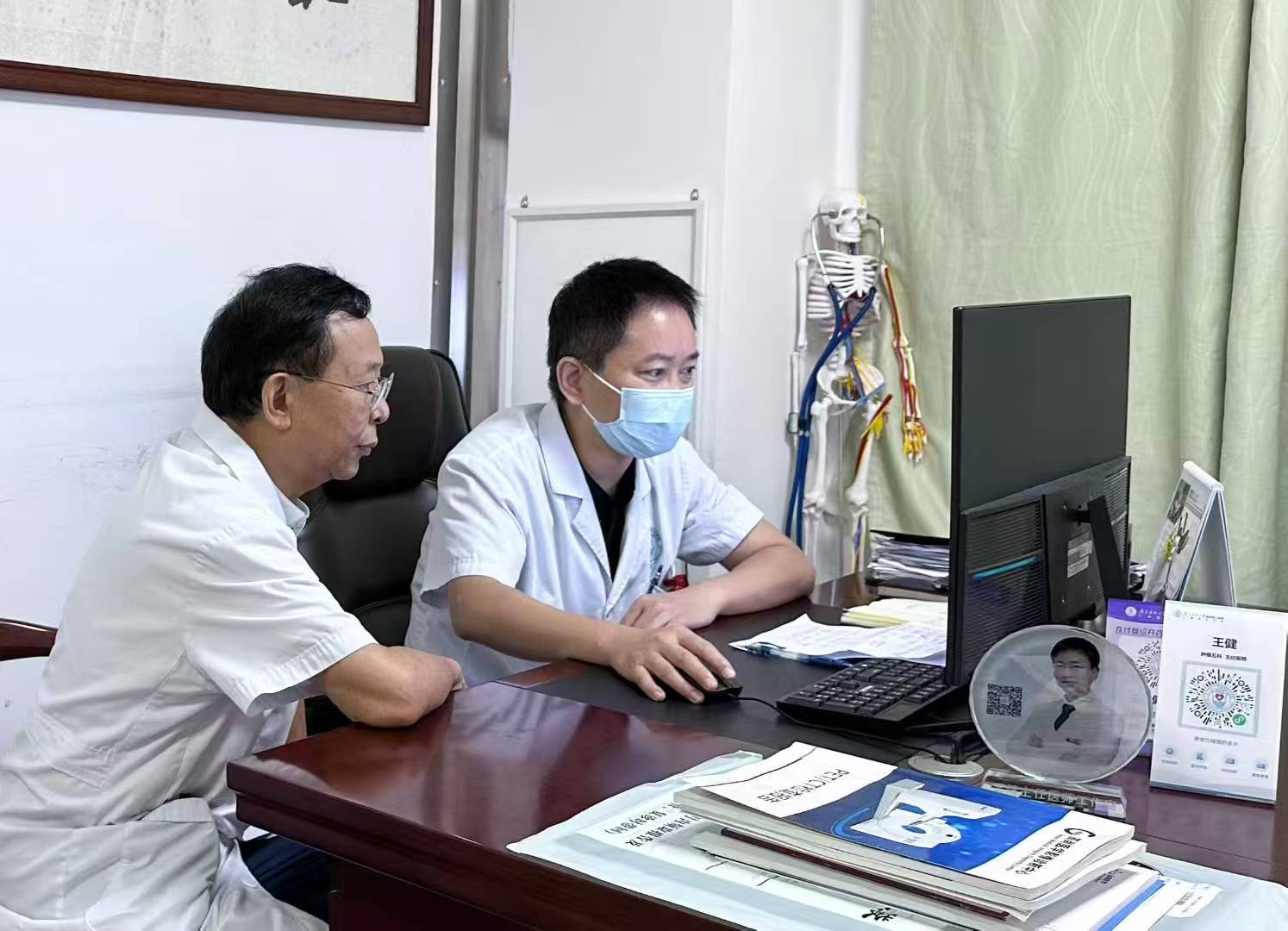
Professor Luo Pengfei led his team in conducting two comprehensive consultations. Adhering to the principle of "prioritizing urgency and severity, treating step by step," they tailored a personalized treatment plan for Mrs. Wang that was strategically arranged and progressively implemented. Each surgical step and its objective were explained patiently and thoroughly to the patient and her family, alleviating their concerns.
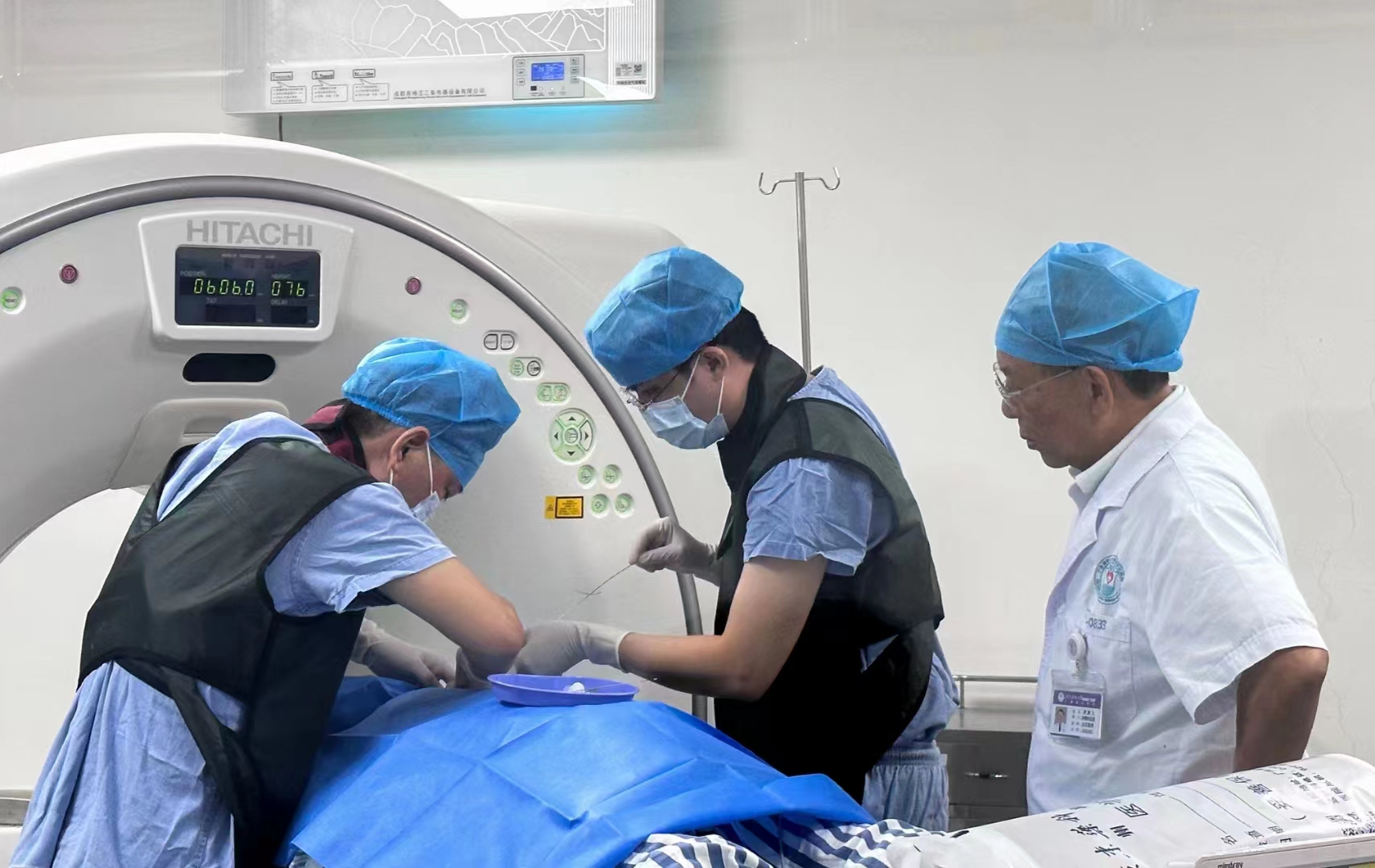
Earlier this month, Professor Luo Pengfei, together with Chief Physician Wang Jian, led the interventional team in performing the first high-difficulty interventional surgery for Mrs. Wang. During the procedure, contrast dye was injected through the indwelling PTCD tube for cholangiography. It clearly showed a complete blockage in the upper segment of the common bile duct, with the contrast dye unable to pass smoothly into the duodenum, confirming the severe biliary obstruction.
The team operated calmly. They first removed the original PTCD tube and introduced a catheter to precisely traverse the narrowed segment into the duodenum. They then replaced it with a stiff guidewire and introduced a balloon dilation catheter, inflating the balloon with contrast dye to fully dilate the occluded common bile duct, initially restoring patency to the blocked biliary tract.
Subsequently, the team precisely implanted a COOK biliary stent (8*60mm) along the guidewire. DSA imaging confirmed the stent was accurately positioned, fully covering the narrowed segment, successfully opening the biliary passage. Repeat angiography showed the contrast dye flowed smoothly through the stent and into the duodenum, completely resolving the bile backup that had troubled Mrs. Wang for days.
The entire procedure was precise and well-organized, perfectly achieving the intended therapeutic effect. On the first day after surgery, Mrs. Wang felt an overall sense of relief. The abdominal distension and jaundice discomfort were greatly alleviated. The furrowed brow she had worn for days finally relaxed, and a long-lost smile appeared on her face.
Sun Simiao, the revered King of Medicine, wrote in "On the Absolute Sincerity of Great Physicians": "When a great physician treats an illness, they must first calm their spirit and stabilize their resolve, free from desires and attachments. They must first cultivate a heart of great compassion and empathy, vowing to relieve the suffering of all sentient beings."
This means that a physician of exemplary character and skill, when treating an illness, must maintain a composed spirit, free from desires and expectations. They must first show profound compassion and empathy, resolving to save all beings from their afflictions.