Dedicating himself to performing minimally invasive portosystemic shunt surgery for patients with portal hypertension complicated by gastrointestinal bleeding; carrying out chemotherapy infusion and embolization for a patient with lymphoma of the left upper eyelid; his research and learning endeavors spanning across China and the world—at 77 years old, he still insists on performing interventional procedures for over a thousand tumor patients annually. With a small catheter in hand, through skillful maneuvers, punctures, needle placements, and infusions, he swiftly alleviates severe and long-standing illnesses.
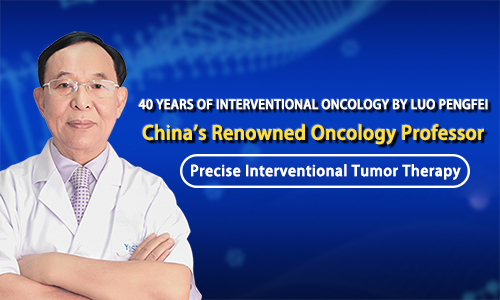
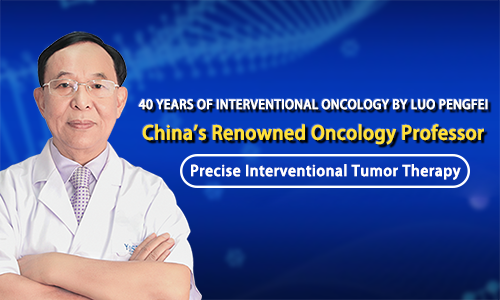
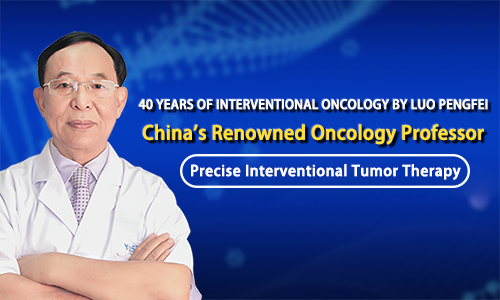
He is the renowned expert in interventional radiology oncology in China, Professor Luo Pengfei. Former Director of the Imaging and Interventional Center at Guangdong Provincial People's Hospital and a tenured professor, he is also the founder of the "Luo Pengfei Programmatic Interventional Oncology Therapy," specializing in treating various solid tumors through interventional methods. Even after retirement, Professor Luo remains dedicated to his patients, choosing to collaborate with Guangzhou Xinshi Hospital to continue igniting the "light of life" for cancer patients. This year marks Professor Luo's 40th year of commitment to interventional therapy. His former institution warmly organized a simple yet solemn anniversary celebration, recognizing his exceptional skills and relentless efforts, which have made outstanding contributions to the development of interventional medicine in China.
Cherishing Dreams and Embracing Challenges: A Guardian of Health for Cancer Patients
In 1987, after undergoing a series of rigorous evaluations, Professor Luo Pengfei was selected as a visiting scholar to study interventional therapy for one year at the Kobe University School of Medicine in Japan. This year marked a turning point in Professor Luo's life, broadening his horizons. He witnessed advanced medical equipment and sophisticated treatment techniques abroad. During this time, he immersed himself wholeheartedly in the study of interventional therapy, embarking on a path he has steadfastly followed for 40 years.
Later, Professor Luo participated multiple times in the Radiological Society of North America (RSNA) conference held in Chicago, USA, as well as the Cardiovascular and Interventional Radiological Society of Europe (CIRSE) and Asia-Pacific Cardiovascular and Interventional Radiology (CVIR) conferences in Japan and South Korea. These experiences further solidified his passion for interventional therapy and strengthened his resolve to become an exceptional doctor dedicated to safeguarding the health of cancer patients.
After returning from his studies abroad, Professor Luo successively worked in several tertiary hospitals, engaging in tumor interventional therapy. With bold initiatives and a spirit of innovation, he achieved numerous remarkable accomplishments. "In the past, solid tumors were typically treated surgically with ligation. However, I innovatively chose to use a catheter for embolization. Since then, this field has seen significant development." Professor Luo not only implemented this technique but also comprehensively summarized the relevant theories, anatomy, and methods, publishing his findings in national academic journals and presenting them at conferences, where they received wide acclaim.
"In 1995, at the interventional medicine conference held in Seoul, I gave a presentation and presented a paper on interventional therapy for liver cancer, which garnered significant attention from attendees," Professor Luo added.
Skilled in Using the "Needle," Specializing in Battling "Cancer": Extending the Light of Life for Cancer Patients
Last year, Professor Luo recalled a patient admitted to the Fifth Oncology Department of Guangzhou Xinshi Hospital due to portal hypertension and recurrent massive gastrointestinal bleeding. Before admission, the patient had a history of two prior gastrointestinal bleeding episodes, and conservative treatment had proven ineffective, leaving them at constant risk of a third sudden episode. Gastrointestinal bleeding caused by portal hypertension is a common complication, occurring in approximately 90% of patients in the late stages of portal hypertension. It often manifests as upper gastrointestinal bleeding due to ruptured esophagogastric varices, making the surgery one of the most challenging among complex medical conditions.
Given that the patient was not a candidate for liver transplantation, Professor Luo Pengfei and Director Wang Jian led their team in meticulously analyzing the condition, assessing the feasibility of the surgery, and designing two contingency plans for the stent pathway. After consulting with the patient and their family, they decided to perform a minimally invasive transjugular intrahepatic portosystemic shunt (TIPS) procedure to both reduce ascites and lower the risk of bleeding.
Leveraging his extensive experience and solid theoretical knowledge, the surgery was successfully completed. By the second day post-surgery, the patient's abdominal distension had significantly improved, and blood test results had stabilized, marking the beginning of the recovery phase. The successful implementation of this technique not only provides an effective and safe treatment option for patients with cirrhosis, portal hypertension, and recurrent upper gastrointestinal bleeding but also signifies that the comprehensive interventional expertise at Guangzhou Xinshi Hospital has reached the forefront of interventional minimally invasive treatment in China.
Another patient, Ms. Chen, a 62-year-old lymphoma patient, was admitted to Guangzhou Xinshi Hospital due to metastasis of lymphoma from her left upper eyelid to her right eye. She suffered from severe eye protrusion, poor vision, and unbearable pain. At the time of admission, Ms. Chen's right eyeball was swollen and protruding, with red, swollen, and everted soft tissues, and her vision was almost completely lost! Professor Luo Pengfei and Director Wang Jian led their team in multiple analyses and assessments of Ms. Chen's condition before formulating a treatment plan, deciding to perform interventional vascular therapy on the lesion in her right eye.
The precision and difficulty of performing interventional surgery on the blood vessels of the eyeball are immense! Ultimately, Professor Luo and Director Wang Jian used right external carotid artery angiography to identify the internal maxillary artery as the main feeding vessel. They skillfully inserted a fine microcatheter into the internal maxillary artery via a circuitous route to successfully perform chemotherapy infusion and embolization.
Post-procedure angiography showed slowed blood flow in the tumor-feeding artery and the disappearance of tumor staining, indicating a successful surgery! On the fourth day post-surgery, Ms. Chen's swollen, everted, and severely affected right eye had substantially recovered, and her vision gradually improved.
Today, at Guangzhou Xinshi Hospital, the department led by Professor Luo Pengfei completes over a thousand minimally invasive interventional procedures for cancer patients annually, with the complexity and scope of surgeries continuously expanding. Many patients say, "Seeing Professor Luo there puts our minds at ease."
Meticulously Organized, the Essence of Dedication: Receiving China's First "World-Class" Patent Certification
In November 2022, the "Programmatic Standardized Procedure for Inactivating Tumor Biological Activity," meticulously organized and innovatively developed by the Luo Pengfei · Wang Jian Programmatic Interventional Oncology Research Team from the Fifth Oncology Department of Guangzhou Xinshi Hospital, was granted a patent application approved by the Luxembourg Intellectual Property Office. This is understood to be the first therapy in China's interventional oncology field to receive intellectual property protection through an international patent. It also marks the third authoritative recognition for this therapy, following a first-place award for scientific research from the Guangdong Provincial Health Department and a third-place award for scientific and technological progress from the Guangdong Provincial People's Government.
It is understood that the Luo Pengfei · Wang Jian Programmatic Interventional Oncology Research Team prepared meticulously for three years, successfully passing the review on their first application. This achievement, bringing domestic interventional oncology research results under the protection and recognition of an international patent, not only affirms the years of exploration and progress made by the hospital's oncology research team but also acknowledges the technical level and academic achievements in interventional oncology in China.
To fully leverage this expertise and ensure the legacy and advancement of the "Programmatic Standardized Procedure for Inactivating Tumor Biological Activity," Professor Luo generously compiled his knowledge and experience into a clinical guidebook titled Luo Pengfei Programmatic Interventional Oncology Therapy, making it available for more scholars and practitioners in the field to study and learn from.