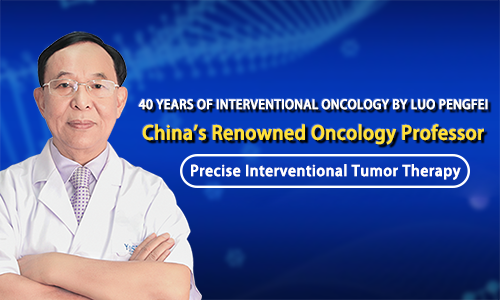
In Critical Moments, Daring to Commit Fully
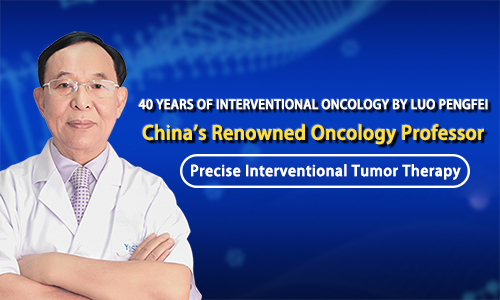
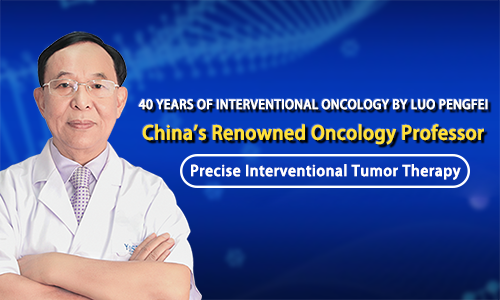
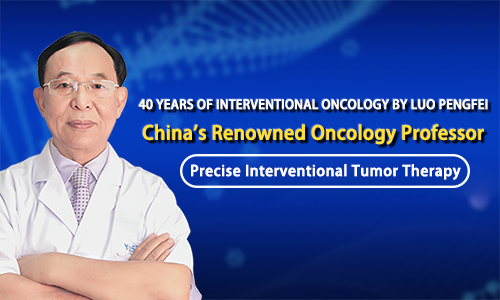
Academician Zhong Nanshan and Professor Luo Pengfei share deep mutual respect. In Ferrymen of the River of Life, a book compiled by Guangdong Provincial People's Hospital, Academician Zhong Nanshan wrote in the preface: “Luo Pengfei is my close comrade-in-arms.”
Although they specialize in different medical fields, they have forged a profound friendship through decades of professional collaboration.
In Academician Zhong Nanshan’s eyes, Luo Pengfei is a person who “dares to commit fully.” Whether facing critically ill patients or difficult cases referred from other hospitals for assistance, he never shirks responsibility or makes excuses. Instead, he readily accepts every challenge, embodying the distinction between a true industry leader and an ordinary practitioner.
When Reflecting on His Career, He Remains Focused on Clinical Practice
As a leading figure in interventional radiology in China, Luo Pengfei holds numerous important titles: member of the Guangdong Provincial Medical Accident Appraisal Committee, senior healthcare consultant at national, provincial, and municipal levels; he served as the first Chairman of the Guangdong Society of Interventional Radiology; he was successively elected Deputy Director of the Interventional Society of the Chinese Society of Radiology, Director of the Chinese Anti-Cancer Association, Deputy Director of its Interventional Therapy Committee, and Director of the China Medical Imaging Technology Research Association.
In 1984, he performed the first renal artery stenosis balloon angioplasty in Guangdong Province; in 1986, he carried out the first catheter embolization for varicocele; in 1988, he established China’s first interventional therapy department managed by interventional radiologists; in 1989, he completed China’s first TACE (transcatheter arterial chemoembolization) using gold mixed with lipiodol; in 1992, he pioneered the use of absolute ethanol for local injection ablation of residual tumors after TAE.
When reflecting on his career, Luo Pengfei remains remarkably calm and modest. He focuses on accumulating clinical experience, closely monitoring international advances and developments in interventional medicine, and continuously learning to improve himself.
With solid theoretical knowledge and outstanding clinical expertise, he has stood firmly alongside his patients in the fight against disease. Over more than 40 years of battling cancer alongside patients, he has personally treated over 20,000 patients with liver cancer, relieving their suffering and prolonging their lives.
Self-Motivated and Unyielding, Maintaining Utmost Integrity in His Work
In 2007, Luo Pengfei retired from Guangdong Provincial People's Hospital. At the hospital’s Spring Festival gala that year, the leadership invited him to sit in the front row as a sign of respect. Yet Luo Pengfei felt uneasy; he was reluctant to leave the operating table, convinced that he still had abundant energy to contribute.
Kazuo Inamori, the renowned Japanese entrepreneur, categorized people into three types in his writings: self-igniting, ignitable, and non-ignitable. Luo Pengfei exemplifies the self-igniting spirit—passionate, proactive, and morally upright, maintaining purity in purpose, dedication in work, and sincerity in action.
To this day, he remains active in the operating rooms of the Third Affiliated Hospital of Guangdong Pharmaceutical University, performing approximately 1,200 operations each year. He has resolved countless complex medical challenges for cancer patients, earning him the reputation among colleagues and patients alike as a “Ferryman of the River of Life.”
Facing Challenges Head-On: Accepting a Patient With Nowhere Left to Turn
Awei, now 34, recalled that just as his entrepreneurial career was flourishing, he faced a life-altering turning point on June 5, 2020—he was diagnosed with advanced liver cancer, considered inoperable.
Over the following two months, he visited several major hospitals across China, only to be told that no effective treatment was available. Professor Luo Pengfei accepted his case. Seeing hope in Awei’s eyes, Luo said simply: “Admit to the hospital, and we will fight this together.” Awei later described the moment as seeing a ray of light in a pitch-dark cave.
Awei suffered from multiple nodular liver cancer with portal vein tumor thrombosis, ascites, splenomegaly and hypersplenism, as well as esophagogastric variceal bleeding—a manifestation of portal hypertension. This was a complex syndrome rather than a single disease. With his extensive experience and expertise, Professor Luo immediately recognized the severity of the case.
Professor Luo Pengfei and Dr. Wang Jian, Director of the Fifth Department of Oncology, held multiple consultations to analyze Awei’s condition. They developed a comprehensive, step-by-step treatment strategy: first, cholangiography and biliary drainage to relieve jaundice; second, medical therapy to protect liver function and prepare for subsequent interventions; third, embolic microspheres to treat multiple nodular tumors.
Departing from conventional precision targeting, they adopted an inverted pyramid “surface-first, point-later” encirclement strategy: first using embolic agents to reduce tumor volume broadly, then focusing local medication on residual lesions to achieve tumor control via ablation. Finally, they implanted drug-eluting particles to induce fibrosis of the tumor thrombus, reduce its size, expand the portal vein lumen, alleviate portal hypertension, and promote absorption of ascites.
On the morning of April 15, 2021, at 11:00, Professor Luo Pengfei led his team to successfully perform a transjugular intrahepatic portosystemic shunt (TIPS) procedure for Awei. Using a memory alloy stent, they created a shunt between the portal vein and hepatic vein to reduce portal pressure.
The technical difficulty of TIPS lies in the puncturing procedure, which demands exceptional skill and extensive clinical experience; it is performed in only a small number of medical centers in China. The operation successfully established an artificial shunt between the portal and systemic venous systems via the jugular vein, diverting part or all of the portal blood flow into the systemic circulation.
This effectively reduced portal venous pressure, prevented and controlled rupture of esophagogastric and rectal varices, and promoted the resolution of ascites. After ten hospital admissions, Awei’s condition has stabilized. He said: “I feel extremely fortunate to have met Professor Luo Pengfei.”
Acting Without Delay to Save a Critically Ill Patient
On September 22, 2021, 32-year-old A Yu came to Professor Luo Pengfei after two months of treatment at two major hospitals in Beijing, with no improvement.
A Yu was diagnosed with mucinous adenocarcinoma of the appendix, secondary malignant liver tumors, secondary malignant abdominal tumors, accompanied by ascites, pleural effusion, hypoalbuminemia, anemia, and thrombocytopenia. He also developed edema in both lower limbs and the scrotum, as well as lower abdominal distension. On August 3, 2021, he underwent omentum resection in Beijing, but his symptoms persisted.
Seeing A Yu suffering from recurrent abdominal pain, fatigue, shortness of breath, and feeble speech, Professor Luo recognized his critical condition. Without hesitation, he scheduled surgery for the next day.
During the operation, inferior vena cava (IVC) venography revealed severe compression, stenosis, and occlusion of A Yu’s IVC, extending from the mid-body of the 11th thoracic vertebra to the upper border of the 2nd lumbar vertebra, consistent with Budd–Chiari syndrome. Extensive collateral circulation had developed, allowing contrast medium to drain into the right atrium through collateral vessels.
Professor Luo immediately performed IVC stent implantation. He inserted a super-stiff guidewire, withdrew the catheter, and advanced a stent delivery system along the wire. The proximal end of the stent was positioned at the mid-body of T11. After slow deployment, the stent expanded fully, covering from mid-T11 to the lower border of T12, but did not fully cover the entire occluded segment.
Luo then inserted a second super-stiff guidewire and another stent delivery system. The proximal end of the second stent was placed at the lower border of T12, overlapping the distal end of the first stent. After gradual deployment, the second stent expanded completely, extending from the lower border of T12 to the upper border of L2, fully covering the occluded segment.
He then advanced a catheter over a black guidewire for repeated IVC venography. Imaging confirmed that the occluded segment of the IVC was fully reopened, the stents were well-positioned, and contrast medium flowed smoothly through the IVC into the right atrium.
Through prompt, precise, and decisive intervention, A Yu’s condition was stabilized, buying precious time for further treatment.
Recently, 71-year-old Mr. Li was admitted with left upper abdominal pain and diagnosed with non-Hodgkin lymphoma, with a large tumor measuring 13 cm × 9 cm. Surgeons recommended open resection. However, after learning about non-surgical tumor treatment options, Mr. Li’s family sought care from Professor Luo Pengfei at the Fifth Department of Oncology.
Professor Luo’s minimally invasive interventional oncology team conducted a comprehensive evaluation and decided to perform argon-helium cryoablation. The patient experienced almost no pain during the procedure and tolerated it well. The operation was highly successful with excellent outcomes.
Under CT guidance, the cryoablation probe was precisely advanced to the tumor along the pre-planned path to ablate and destroy tumor cells.
Professor Luo explained: “This is the latest-generation argon-helium ultra-low temperature cryoablation system, launched on the market less than two months ago. Within two minutes of activation, the probe temperature drops to −157 °C, with real-time temperature monitoring, enabling complete cryoablation of tumor cells. It is a powerful tool for shrinking large tumors.”
The patient experienced minimal discomfort during the procedure. Postoperatively, Mr. Li recovered smoothly and was discharged soon after.
As the academic leader of the Minimally Invasive Interventional Oncology Team at the Fifth Department of Oncology, Guangdong Pharmaceutical University Guangzhou Fosun Chancheng Hospital, Professor Luo Pengfei has extensively applied minimally invasive interventional oncology techniques in clinical practice, performing more than 1,000 such procedures each year.
Cryoablation is performed under local anesthesia. Under CT guidance, a cryoablation needle is precisely inserted percutaneously into the tumor. The cryoablation system is then activated to freeze and destroy tumor cells completely, achieving effective curative ablation.