On October 13, 2022, the "Programmatic Standardized Procedure for Inactivating Tumor Biological Activity," innovatively developed by the Luo Pengfei · Wang Jian Programmatic Interventional Oncology Research Team from the Fifth Oncology Department of Guangdong Pharmaceutical University Guangzhou Fosun Chancheng Hospital (Xinshi Hospital), was granted a patent application approved by the Luxembourg Intellectual Property Office (Document No.: LU501835).
The patent review process is rigorous, and the patent holds high authority and recognition within the Benelux Union member states, the European Union, and even worldwide.
It is understood that this is the first therapy in China's interventional oncology field to receive intellectual property protection through an international patent. It also marks the third authoritative recognition for this therapy, following a first-place award for scientific research from the Guangdong Provincial Health Department and a third-place award for scientific and technological progress from the Guangdong Provincial People's Government.
Minimally Invasive Intervention: Potentially the Primary Future Approach to Tumor Treatment
Malignant tumors are among the significant threats to human health and life. While surgical resection, radiotherapy, and chemotherapy are the current three main treatment modalities, they often inflict considerable trauma on patients.
How to treat and control tumors while preserving patients' physiological functions and improving their quality of life has consistently been a key focus of research for experts and scholars worldwide.
Since its emergence, minimally invasive interventional oncology has demonstrated remarkable "vitality" in cancer treatment. Its advantages—such as avoiding open surgery, lower cost, good efficacy, strong targeting, and reduced toxicity and side effects—have gradually established it as a "dark horse" in the field of oncology.
Having developed into the fourth major cancer treatment modality, it now forms, together with internal medicine and surgery, the three pillar disciplines of clinical practice, thus attracting significant attention from scholars in the field.
Exceptional Foresight: Early Recognition of the Immense Potential of Tumor Intervention
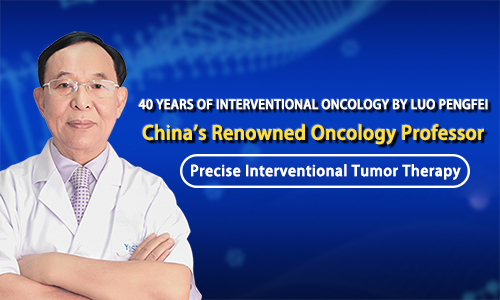
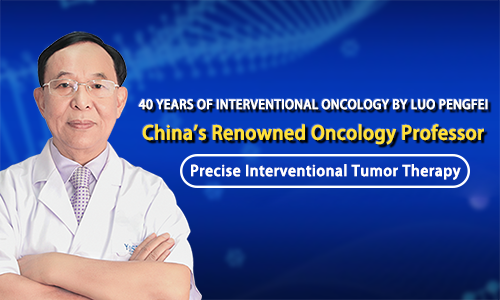
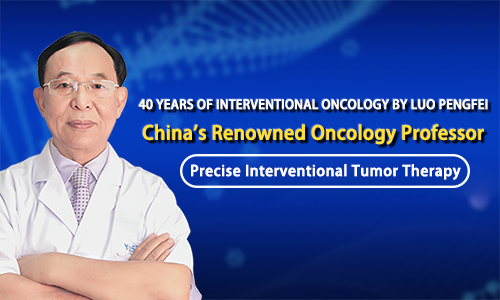
Professor Luo Pengfei from our Fifth Oncology Department demonstrated exceptional foresight. As early as the 1980s, he recognized the feasibility and immense potential of interventional oncology for the future. During his研修 (advanced studies) in Japan about 40 years ago, he was profoundly "moved" upon his first exposure to interventional therapy. Subsequently, he participated multiple times in major international professional medical conferences on interventional therapy held in Europe, Japan, and South Korea, engaging with advanced peers, exchanging knowledge, and making his voice heard internationally.
With over 40 years of dedication to interventional oncology, leveraging his extensive specialized knowledge and broad vision, he led his team in pioneering the distinctive "Luo Pengfei Programmatic Interventional Oncology Therapy." This approach not only creates a final glimmer of hope for numerous cancer patients but also represents a significant contribution to the advancement of interventional oncology in China.
Four Decades of Deep Commitment: Leading the Team to Multiple Prestigious Awards
In March 2003, the project "Programmatic Study of Interventional Therapy for Primary Liver Cancer," led by his research, received the Third Prize for Scientific and Technological Progress from the Guangdong Provincial People's Government (Yue Wei Ke Zi No. 2000-201).
This project, developed a full 20 years before the formulation and release of the "Standardized Diagnosis and Treatment Protocol for Primary Liver Cancer (2019 Edition)," set a precedent in the field of minimally invasive intervention by providing a guiding standard for clinical technical application.
With the advancement of global interventional oncology equipment, imaging diagnostic tools, innovations in infusion drugs, and the development of artificial intelligence application technology, combined with 40 years of rich clinical experience, the "Luo Pengfei Programmatic Procedure for Inactivating Tumor Biological Activity" has matured and improved. Its scope of application has expanded to include various malignant tumor types such as liver cancer, lung cancer, nasopharyngeal carcinoma, and brain tumors.
In April 2022, this therapy was submitted for foreign patent approval by the Luxembourg Intellectual Property Office. The rigorous patent review process evaluated not only economic and creative value but also its application prospects and social impact.
The Luo Pengfei · Wang Jian Programmatic Interventional Oncology Research Team navigated challenges and, through three years of meticulous preparation, successfully passed the review on their first application.
These multiple authoritative awards and recognitions attest to the reliability, professionalism, and authority of the "Luo Pengfei Programmatic Procedure for Inactivating Tumor Biological Activity."
Benevolent Healer, Striving for Excellence: Reaching Beyond Borders, Presenting a "China Card" to the World
Professor Luo Pengfei emphasizes that treating illness should not solely focus on the disease but prioritize the patient—a principle that aligns perfectly with the modern medical concept of "patient-centeredness."
From this perspective, he believes physicians should employ systematic thinking to provide comprehensive and personalized cancer treatment plans. After years of dedicated research into interventional oncology, he believes tumors possess biological activity, and this activity implies the possibility of achieving complete inhibition or even elimination through treatment.
This process involves five steps: screening the tumor, controlling the tumor, shrinking the tumor, inactivating the tumor, and preventing tumor recurrence/progression. With the advent of modern advanced imaging techniques like PET-CT, the degree of tumor activity can now be identified.
The "Programmatic Standardized Procedure for Inactivating Tumor Biological Activity" allows for standardized treatment corresponding to these five stages, aiming to suppress tumor biological activity, achieve clinical symptom-free status, prevent and block tumor recurrence and metastasis, and extend the interval between recurrences. This ultimately optimizes the match between patient survival duration and quality of life.
"We believe we can benefit more patients." Driven by this conviction, despite his advanced age, Professor Luo remains active in the operating room, working alongside his team, consistently completing over 1,500 comprehensive interventional oncology procedures annually.
This successful international patent protection and recognition of domestic interventional oncology research achievements through the "Luo Pengfei Programmatic Interventional Oncology Therapy" not only affirms the years of exploration and progress made by the hospital's Luo Pengfei · Wang Jian Programmatic Interventional Oncology Research Team but also validates the technical level and academic accomplishments in interventional oncology in China.
The department team hopes this innovative therapy, which has received multiple authoritative recognitions, will not only benefit patients but also serve as a "calling card" representing China on the world stage.
In the future, the department will continue the research and clinical application of the "Luo Pengfei Programmatic Interventional Oncology Therapy," adhering to the principle of patient-centered individualized care, with the ultimate clinical goal of inactivating and eliminating tumor biological activity, thereby creating new possibilities for patients to live with cancer.